KEY POINTS
• Singapore’s workforce is grappling with the twin challenges of an aging population and job displacements due to technology.
• According to Singapore’s Education Minister Ong Ye Kung, the government has been preparing for the challenge of an aging workforce “for the past 20 years.”
• But an aging population is not the only challenge Singapore faces. Like the rest of the world, technological disruption is set to shift the employment landscape.
Singapore’s workforce is grappling with the twin challenges of an aging population and job losses due to technology.
According to a report on the burden of disease in Singapore between 1990 and 2017, the Southeast Asian nation surpassed Japan in 2017 to become the country with the longest life expectancy at birth — at nearly 85 years old.
Longer life expectancy, coupled with a low fertility rate, has increased the proportion of older people in the country. As a result, the city state’s workforce is rapidly shrinking, creating pressure on the economy.
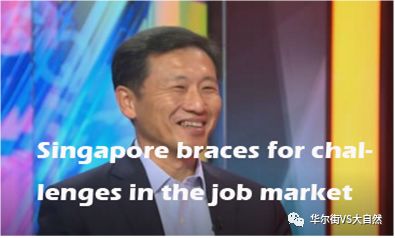
According to Singapore’s Education Minister Ong Ye Kung, the government has been preparing for an aging workforce “for the past 20 years.”
Singapore is in the midst of “reforming the education system for the young,” Ong told CNBC’s “Squawk Box Asia” on Tuesday. He pointed out, however, that the challenge was really in helping older workers, as younger employees are “very adaptive.”
As part of efforts to engage the aging population in the economy, Singapore’s Prime Minister Lee Hsien Loong announced last week that the country will be raising the retirement age — from 62 years old, to 63 in 2022 and eventually to 65 in 2023.
Subsidies for new skills
But an aging population is not the only challenge Singapore faces. Like the rest of the world, technological disruption is set to shift the employment landscape.
A study conducted by technology firm Cisco and research agency Oxford Economics — which looked at the implications of technology on workers in Southeast Asia — found that Singapore’s labor market faces the largest risk of job loss over the next decade.
Singapore is trying to tackle the problem by equipping its workforce with new skills.
Four years ago, the city state launched SkillsFuture — a program designed to give subsidies to citizens for learning skills or developing their careers. The initiative is aimed at trying to retrain older workers to “adapt to the economy,” Ong said.
While not discounting the importance of understanding artificial intelligence and robotics, Ong stressed the need to “learn your current job well” and master the skills of your trade.
When “you learn it so well, you can use technology, you can use AI, to assist you to do it better,” he said.
The education minister recognized that in the coming years, more work will have to be done for workers to effectively switch from “one industry to another,” and “between segments or value chain of the same industry.”
He cited a company in Singapore — DBS Bank, which he said has managed to help workers’ transition between roles within the company.
The bank trained tellers to take on new, digital functions in the company.
While “mundane work” will eventually be “replaced by machines,” personal relationships will not, said Tan Su Shan, group head of institutional banking at DBS, told CNBC’s “Squawk Box” on Thursday.
She highlighted the importance of adaptability within the firm and among employees.
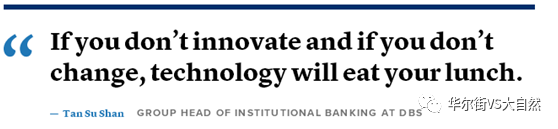
“If you don’t innovate and if you don’t change, technology will eat your lunch,” Tan said.
PUBLISHED SUN, AUG 25 2019
Blanche Lim